Hormonal Shifts and How We Balance Them
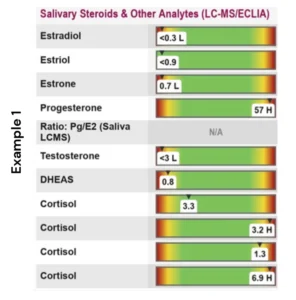
Many women throughout history have experienced hormonal shifts during their menstrual cycles, during perimenopause, menopause, and post menopause leading to uncomfortable symptoms. Often, the most profound shift is during perimenopause and menopause when the hormones dramatically shift, resulting in deficiency of the hormones. Above, you can see how salivary testing can help evaluate these hormone levels to create individualized treatment plans to improve the side effects of hormonal shifts. In the example above, this patient experienced many of the classic symptoms including hot flashes, night sweats, weight gain and poor sleep.
Part of her treatment plan was to provide estrogen replacement in the form of a Bi-Est cream (a compounded formulation of estradiol/estriol) along with DHEA supplementation to attempt to balance testosterone levels without putting her into an excess androgen state that would lead to further undesirable side effects. Additionally, in example 2, you may notice the elevated progesterone level. Given her deficiency in all other areas, this was likely a false positive resulting from exposure to a progesterone source during her testing window. Oral supplementation was recommended as it can improve sleep by acting on the GABA receptors.
You may also recognize that her cortisol levels, tested in 4 different time periods throughout the day, show that she is also in a state of elevated cortisol with symptoms including difficulty with sleeping due to feeling “tired but wired”, increased stress, possible headaches, risk for decreased bone density, and abdominal weight gain. To provide stability in her cortisol levels, we opted for an adaptogen blend of herbs taken right away in the morning to provide balance to the HPA axis. Improving her cortisol levels will not only improve her stress response, but may also improve cognitive function, protect against oxidative stress on the body, and potentially reduce fatigue.
Example 2
Another patient was experiencing similar symptoms to patient 1, however, there was a significant difference in how their body was responding to stress. As you can see in the graph, her two testing points show she was in a decreased cortisol state which can manifest as fatigue or exhaustion, poor stress tolerance, irritability, salt or sugar cravings, and body aches and pains. It is unclear from this initial testing if she had been experiencing cortisol deficiency or if this was a presentation of adrenal fatigue where she had been functioning in an elevated cortisol state for long enough that her adrenal glands fatigue. Treatment for her cortisol levels also included adaptogens and herbs to balance her cortisol levels.
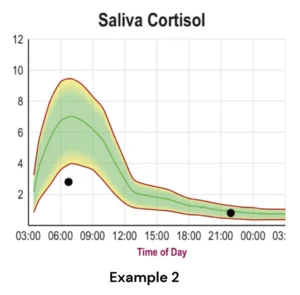
For the patient in example 2, our goal was not to further decrease her cortisol level as we did not want to enhance her already undesirable symptoms, instead we chose an adaptogen blend that works to balance the HPA axis while blocking the conversion of active cortisol into inactive cortisone to promote healthy cortisol levels to put her back in the desired reference range.
Both of the women in these examples had symptoms that were largely attributed to hormonal imbalance. Salivary testing is a safe and effective way to assess hormone levels without blood draws. Additionally, salivary testing is a great option for subsequent testing when using topical hormonal options for supplementation. Both of these women will return to the office 3 months after being on treatment to assess their symptoms, obtain repeat labs, and, through joint decision making, will make dose adjustments to continue to improve their well-being.